
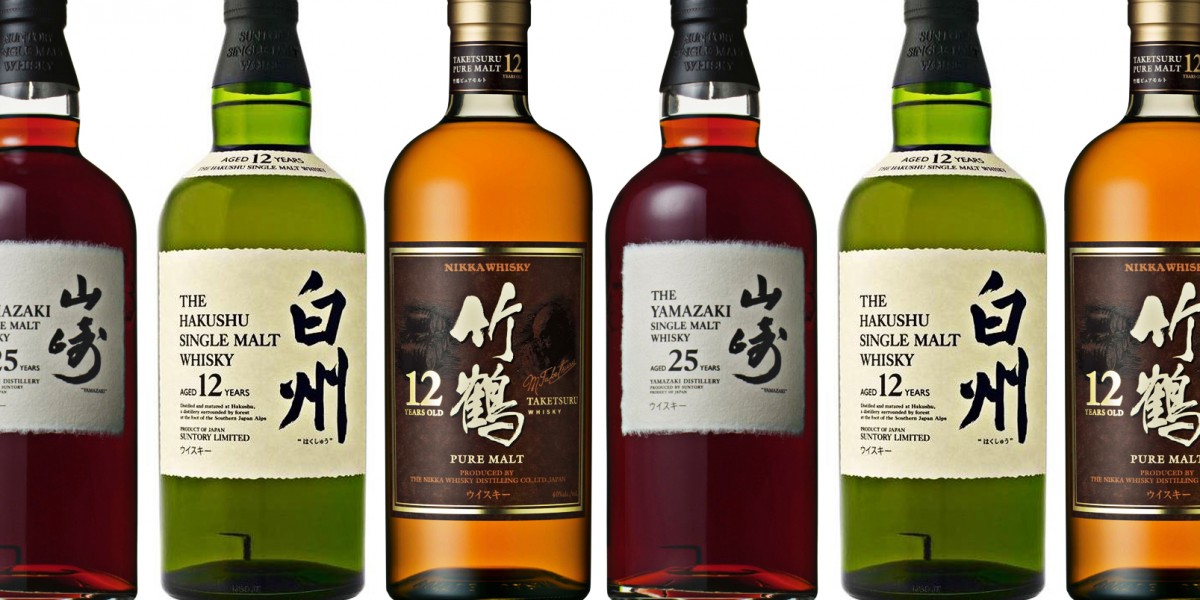
JAPON VİSKİLERİ
 Aslında herşey Birinci Dünya Savaşı sonunda İmparator Taişo’nun Japonya’nın ileri gelen ailelerini bir araya toplaması ile başlıyor. İmparatora göre bir ülkenin dünya çapında söz sahibi olabilmesi bundan sonra sadece ekonomik anlamda güçlü olanlar bir adım önde olacaktır. Otomotiv, tekstil, teknoloji gibi konularda görev alan aile çocukları ile beraber ailesinin seçimiyle Glasgow’da kimya eğitimi gören ve İngilizcesi de iyi olan daha sonra dan da “Nikka” adını alacak olan Masatuka Taketsuru viski için görevlendirilir. Aslında içki işi babadan kalma bir mirastı. Babası da Japonya’da sake üreticisiydi.
İskoçya’ya vardığında Glasgow’un kuzeyindeki Kirkintilloch kasabasına yerleşti. Hem işin püf noktalarını öğrenebilmek hemde harçlığını çıkarabilmek için adına Hazelburn ve Longmore damıtım evlerinde çalışmaya başladı. 2 yıl boyunca işi en ince ayrıntısını öğrenene kadar işine devam etti.
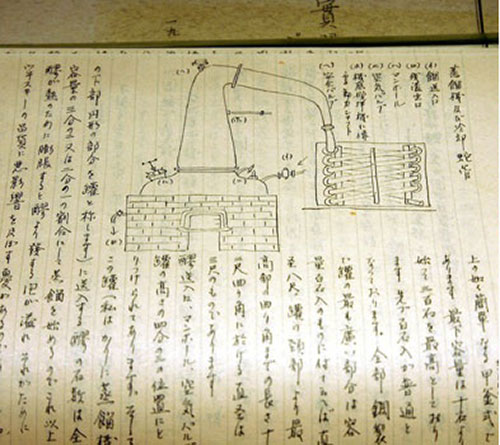
(Taketsuru’nun ders notları)
Hayatındaki en büyük değişiklik oturduğu evin sahibinin kızı olan Rita’ya aşık olmuştu. Her ikiside hiç düşünmeden evlendiler. Öğrendiği teknik ve bilgileri hem babası hemde İmparatoru ile paylaşmak ve bir an önce viski üretmek için 1920 de Japonya’ya doğru yola çıktılar. Viski hakkında öğrendiği her detayı anlatan Taketsuru konuşmasının sonunda eşini imparatora tanıştırmak ister. Bu evlilik o tarihte hiç de hoş karşılanmaz. Zira Japon bir erkeğin yabancı bir hanım ile evlenmesi bir tabu idi. Hatta Taketsuru bu konuda seçim bile yapmaya zorlanır. Herşeye rağmen o yinede tercihini eşinden yana kullanmıştır.
Sıra viski hakkında yapacaklarına gelmiştir. Anavatana dönen Nikka ilk olarak 1923 yılında Shinjiro Torii ‘nin sahibi olduğu Suntory damıtım evinin başına geçer ve Japon viskilerinin temeli olan süreci başlatır ve ilk eserini 1924 senesinde üretir. Taketsuru ‘nun bu işi İskoçya’da öğrenmiş olmasından dolayı yapmış olduğu viskiler genel olarak İskoçya malt viski tarzındadır. Aynı İskoçlar gibi “Single Malt” ve “Pure Malt” viskiler üretiyorlar. Tarz ve tad olarak İskoç Vikilerine yakın olmakla beraber meşe aromasına gönül verenler için daha uygun. Günümüzde de bu tarz devam etmektedir. Aslında günümüzde Japon viskilerinin çokça tercih ediliyor olmasının en büyük sırrı Arpaların maltlanmış olarak İskoçya’dan geliyor olması. Genellikle 50 cl ve 70 cl ebatlarında şişeleniyorlar. Küçükler ama fiyatları ülkede uygulanan yüksek vergiden nasibini aldıkları için pek de ucuz sayılmazlar.
1924 senesinde üretimine başlanan Japon viskileri yaklaşık 2000 senesine gelene kadar anca Japonya’ya gidenlerin tadabildiği viskilerdi. Çünkü Japonlar bu viskileri bu süreçte sadece kendileri için ürettiler. Japonya’da ilk günden bugüne toplamda 10 adet damıtım evi kurulmuş bunlardan 9 tanesi günümüze kadar yaşayabilmiştir. Bunlar: Yoichi, Yamazaki, Hakushu, Sendai, Hanyu, Mars Shinshu, Shirakawa, Karuizawa, Gotemba damıtım evleridir. Bunlardan Yamazaki ve Hakushu Suntory’ye bağlı damıtım evleridir. Özellikle 2000 senesinden sonra viskilerini dünyaya tanıtmak, Japon viskilerinin de dünyaca tanınması amacıyla dışa açılma kararı aldılar. 2010 yılında itibaren artan bir trend ile iyi bir pazar oluşturdular. Hızla büyüyen ve tüm dünayada en çok biline Japon viski üreticilerinden biri olan Suntory firması 2011’de Dev Amerikan Bourbon markası Jim Beam’i satın alarak “Beam Suntory” adını aldı. 2015 de yani geçen sene şarabın puanlamasını yapan Robert Parker gibi her sene tüm dünyadaki viskilerin değerlendirmesini yapan “Whisky Bible”’ın yazarı Jim Murray “Yamazaki Single Malt Sherry Cask”’ i yılın viskisi olarak seçti. Bu 1924 senesinde başlayan hikayenin en güzel meyvesiydi.
Tarz olarak her ne kadar İskoç viskilerine benzeselerde servis edilişlerinde büyük farklılıklar gözlenebiliyor. Bir kere buz onlar için çok önemli. Buzu özel olarak üretip servis edilecek bardağa sığabilecek kadar yontup büyük bir parça halinde servis etmek oldukça yaygın. Hatta ekstradan su bile ilave ediyor bunun için ciddi bir seromoni bile yapıyorlar. Bu servis şekilinin ismi “mizuwari”, 1950’lerde Churcill ile popüler hale gelen viski-soda Japonlarında tercih ettiği bir servis şekli. Bu servisin adı “ sodawari” . Sıkı durun belkide daha önce hiç duymadığınız bir viski servis şeklinden bahdeceğim. “oyuwari” adındaki bu serviste viski sıcak su kullanılmakta. Ayrıca Kıbrıslı dostlarımın kulakları çınlasın Japonlarda Kıbrıslılar gibi viskiyi genellikle yemekle tüketmeyi tercih ediyorlar.
 In fact, everything starts at the end of the First World War when Emperor Taisho gathers the leading families of Japan together. According to the Emperor, from now on, only those who are economically strong will be one step ahead for a country to have a say in the world. Masatuka Taketsuru, who is studying chemistry in Glasgow with the choice of his family and who will later be named “Nikka”, who is also good in English, is assigned for whiskey. In fact, the liquor business was an inheritance from his father. His father was a sake maker in Japan.
When he arrived in Scotland, he settled in Kirkintilloch, north of Glasgow. In order to learn the tricks of the trade and to earn his pocket money, he started working at Hazelburn and Longmore distilleries. For 2 years he continued to work until he learnt the finest details of the job.
The biggest change in his life was falling in love with Rita, the daughter of the owner of the house where he lived. They both got married without a second thought. They set off for Japan in 1920 to share the techniques and knowledge he had learnt with both his father and the Emperor and to produce whisky as soon as possible. At the end of his speech, Taketsuru, who explained every detail he had learnt about whisky, wanted to introduce his wife to the emperor. This marriage was not welcomed at that time. Because it was a taboo for a Japanese man to marry a foreign lady. Taketsuru was even forced to make a choice in this matter. Despite everything, he still chose in favour of his wife.
Now it was time to do something about whisky. Returning to the homeland, Nikka first took over the Suntory distillery owned by Shinjiro Torii in 1923 and started the process that is the basis of Japanese whiskies and produced his first work in 1924. Since Taketsuru learnt this business in Scotland, the whiskies he made are generally in the style of Scottish malt whisky. They produce “Single Malt” and “Pure Malt” whiskies just like the Scots. Although it is close to Scottish whiskies in style and taste, it is more suitable for those who love oak flavour. This style continues today. In fact, the biggest secret of the fact that Japanese whiskies are preferred today is that the malted barley comes from Scotland. They are usually bottled in 50 cl and 70 cl sizes. They are small, but their prices are not very cheap as they have their share of the high tax imposed in the country.
Started in 1924, Japanese whiskies were only tasted by those who travelled to Japan until about 2000. Because the Japanese produced these whiskies only for themselves in this process. A total of 10 distilleries have been established in Japan since the first day, 9 of which have survived until today. These are: Yoichi, Yamazaki, Hakushu, Sendai, Hanyu, Mars Shinshu, Shirakawa, Karuizawa, Gotemba distilleries. Among these, Yamazaki and Hakushu are distilleries affiliated to Suntory. Especially after the year 2000, they decided to open up to the world in order to introduce their whiskies to the world and to make Japanese whiskies known to the world. Since 2010, they have created a good market with an increasing trend. Suntory, one of the fastest growing and most recognised Japanese whisky producers in the world, acquired the giant American Bourbon brand Jim Beam in 2011 and took the name “Beam Suntory”. In 2015, Jim Murray, the author of the “Whisky Bible”, who evaluates whiskies all over the world every year like Robert Parker, who scored the wine last year, chose “Yamazaki Single Malt Sherry Cask” as the whisky of the year. This was the best fruit of the story that started in 1924.
Although they are similar to Scotch whiskies in style, there can be big differences in the way they are served. First of all, ice is very important for them. It is quite common to produce the ice specially and serve it in a big piece that can fit into the glass to be served. They even add extra water and make a serious ceremony for this. The name of this way of serving is “mizuwari”, a way of serving whiskey-soda, which became popular with Churcill in the 1950s, is preferred by the Japanese. This service is called “sodawari”. Hold on tight, I’ll tell you about a whisky service you may have never heard of before. In this service called “oyuwari”, whisky is served with hot water. Also, let the ears of my Cypriot friends ring, the Japanese prefer to consume whisky with food like Cypriots.


